Timing the Mother Road: The Best Time of Year to Drive Route 66
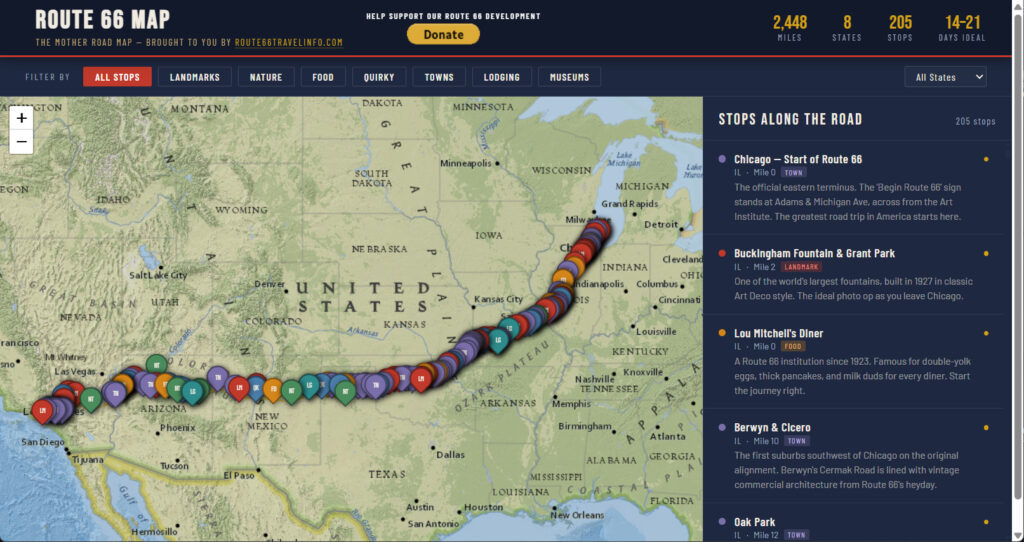
There is no single wrong time to drive Route 66. The Mother Road runs 2,448 miles from Chicago, Illinois to the Santa Monica Pier in California, crossing eight states, four climate zones, two mountain ranges, and the Mojave Desert. That geographic spread means no one season is perfect everywhere at the same time — what’s ideal in the Texas Panhandle might be brutal in the Arizona desert, and what’s gorgeous in the Ozark hills of Missouri might mean snow-slicked roads in New Mexico. The right time to drive Route 66 depends on your priorities: weather comfort, crowd levels, budget, or hitting specific events.
This guide breaks down what each season actually looks, feels, and costs like — state by state, mile by mile — so you can plan your trip around what matters most to you. Whether you’re driving the full 2,448 miles or focusing on a single state, understanding the seasonal rhythms of the Mother Road is the most important planning decision you’ll make.
The short answer, for those who want it upfront:
- Fall (September–November) is the overall best season for most drivers — ideal temperatures, lower crowds than summer, and the most photogenic light of the year.
- Spring (March–May) is the second-best choice — warming temperatures, wildflowers in the desert states, and growing energy as the season picks up.
- Summer (June–August) is the most popular and most challenging — peak crowds and extreme heat in the desert states demand careful preparation.
- Winter (December–February) is the best-value and lowest-crowd season — ideal for the Arizona and California sections, but genuinely difficult in Illinois, Missouri, and Oklahoma.
Read on for the full breakdown.
Route 66 Seasons at a Glance
Use this quick-reference table to compare the four seasons before diving into the detailed breakdowns below.
| Spring (Mar–May) | Summer (Jun–Aug) | Fall (Sep–Nov) | Winter (Dec–Feb) | |
| Weather | Mild to warm; unpredictable storms OK/TX | Hot to extreme; 110°F+ in AZ/NM | Ideal across all 8 states | Cold IL/MO/OK; mild AZ/CA |
| Crowds | Moderate, building | Peak (highest) | Moderate to high | Lowest |
| Budget | Moderate | Highest | Moderate | Lowest |
| Overall | ★★★★½ | ★★★ | ★★★★★ | ★★★½ |
Spring (March–May): The Road Wakes Up
Spring is when Route 66 shakes off winter and begins its long active season. Temperatures across the route are generally mild to warm, the desert landscapes are at their most colorful, and the roadside businesses — many of which close or reduce hours in winter — are back in full operation. The Route 66 driving season is widely considered to begin in earnest in late March or April, and by May the highway is buzzing with travelers who want to beat the summer heat and peak-season crowds.
Weather State by State in Spring
- Illinois & Missouri: Highly variable — March and early April can still bring cold snaps, rain, and occasional snow in northern Illinois. By May, conditions are generally pleasant (60–75°F), with the famous Ozark hills of Missouri turning brilliantly green. Spring thunderstorms are common in both states.
- Kansas & Oklahoma: Tornado Alley is most active in spring (April–June). The Oklahoma panhandle and eastern Kansas can experience severe weather with little warning. Warm temperatures (65–80°F) are interrupted by potentially dramatic storm systems — most travelers drive through rather than linger.
- Texas (Panhandle): Amarillo and the Texas Panhandle are exposed and flat — cold mornings, warm afternoons, and significant wind throughout spring. Late April and May bring pleasant driving weather (70–80°F) with occasional thunderstorms.
- New Mexico: Spring is wind season across the high desert. March and April can be brutally windy, particularly between Albuquerque and Gallup. Temperatures are comfortable (55–75°F) but unpredictable.
- Arizona: The desert wildflower season peaks in March and early April — Petrified Forest National Park and the Painted Desert are breathtakingly photogenic. Temperatures climb quickly: Flagstaff stays cool (45–65°F) while the low desert around Kingman and Seligman reaches 85–95°F by May.
- California: Southern California in spring is close to perfect: 65–80°F from the Mojave through Pasadena and into Los Angeles. The Mojave can still drop to near-freezing overnight in March. Santa Monica is ideal year-round, but spring brings particularly clear days and fewer tourists than summer.
Spring Crowd Levels
Spring crowds begin low in March (outside of Spring Break weeks, which can spike traffic at major stops) and build steadily through May. Spring Break — typically mid-March to mid-April — generates noticeable crowds at the most iconic stops: Cadillac Ranch in Texas, the Painted Desert in Arizona, and the Santa Monica Pier. Outside of those weeks, March and early April are relatively quiet and excellent for travelers who want the road largely to themselves.
Spring Budget
Hotel rates are moderate in spring — not the summer peak, but above winter lows. Book ahead for weekends in April and May, when the Route 66 driving season is fully underway. Gasoline prices typically rise in spring as summer blend fuels are introduced, so expect slightly higher fuel costs than in fall or winter.
Best Spring Experiences on Route 66
- Petrified Forest National Park and the Painted Desert in Arizona — wildflowers and the low-angle spring light make these among the most photogenic stops on the entire route.
- The Ozark hills of Missouri — freshly green in April and May, with the narrow two-lane alignments of old Route 66 cutting through forested hollows at their most lush.
- Oklahoma’s Route 66 — warming temperatures and the first outdoor events of the season at historic stops like the Blue Whale of Catoosa and Pops 66 in Arcadia.
- The California desert — Joshua trees and cacti in bloom through the Mojave, with comfortable temperatures before summer’s extreme heat arrives.
Summer (June–August): Peak Season — Plan Carefully
Summer is the most popular season for driving Route 66, and for understandable reasons: school is out, days are long, and the American road trip mythology that Route 66 embodies feels most alive in July and August. But summer is also the season that demands the most preparation and carries the most risk. The combination of extreme heat in the desert states, peak crowds at every major attraction, and the highest prices of the year for fuel, lodging, and food makes summer the season that separates well-prepared Route 66 travelers from those who end up stranded on the side of the road in 115°F heat outside of Needles, California.
The Desert Heat Problem
This is the central reality of summer on Route 66: the desert states — Arizona, New Mexico, and the eastern California Mojave — experience temperatures that are not merely uncomfortable but genuinely dangerous.
- Needles, California: Regularly exceeds 115°F in July and August. One of the hottest inhabited places in the United States. Carry a minimum of 4 gallons of extra water.
- Kingman to Oatman, Arizona: The mountain grade up to Oatman is stunning — and brutal in summer heat. Check your vehicle’s cooling system before attempting this section.
- Albuquerque and Gallup, New Mexico: High-elevation desert means 95–105°F in the Rio Grande valley, cooler as you rise. Afternoon monsoon thunderstorms (July–September) bring dramatic lightning and flash flood risk on desert washes.
- Amarillo, Texas: Hot (95–105°F) but less extreme than the lower desert. The Panhandle’s lack of shade means the heat is relentless from mid-morning through evening.
Vehicle Preparation for Summer
A summer Route 66 trip requires specific vehicle preparation that other seasons do not:
- Cooling system inspection: radiator, hoses, coolant level and condition.
- Tire pressure: heat expands air; check daily in summer and watch for overinflation.
- Extra water: at least 2 gallons per person in the vehicle at all times in the desert sections.
- Timing: drive desert sections in the early morning (before 10 AM) and late afternoon (after 5 PM). The midday hours in the Arizona and California desert are for air-conditioned stops, not driving.
- Know the nearest town: in the Arizona stretch west of Flagstaff, services can be 30–50 miles apart. Never let the fuel gauge drop below half a tank.
Summer Crowd Levels
Summer is peak season, and popular stops reflect it. Cadillac Ranch draws hundreds of visitors daily. The Santa Monica Pier is jammed. The Wigwam Motel in San Bernardino books out weeks in advance. The solution is simple: book accommodation for the entire route before you leave, especially on weekends in July and August. Walk-in availability at iconic motels is essentially zero in peak summer.
Summer Redeeming Qualities
Summer has real advantages that keep it the most-traveled season:
- Maximum daylight — 14+ hours of driving light means you can cover more ground or spend more time at attractions without rushing.
- Events — the Route 66 festival calendar peaks in summer, including car shows, music events, and community celebrations along the route.
- The northern Illinois and Missouri sections are genuinely excellent in summer — Chicago in July, the Ozarks in August, and the wide Missouri plains under big summer skies are among the best driving experiences on the route.
- The Centennial year of 2026 (Route 66 turns 100 on November 11, 2026) will generate extraordinary summer events — check the Route 66 Centennial page for the latest calendar.
Fall (September–November): The Best Season for Most Drivers
Fall is, by nearly every measure, the best overall season for driving Route 66. The summer heat has broken in the desert states — temperatures drop to manageable and often beautiful ranges — while the northern states (Illinois, Missouri, Oklahoma) deliver the vivid autumn foliage that makes fall driving legendary in the American Midwest and Great Plains. Crowds thin from their summer peak. Prices ease. The light turns golden, low, and warm — exactly the photographic conditions that make Route 66 landscapes look like the postcards that have inspired generations of road trippers.
Fall Weather State by State
- Illinois & Missouri: Peak fall foliage in October. Temperatures cool from 70°F in September to 40–55°F by November. The Ozarks in mid-October are among the most scenic drives in the entire country — Route 66’s two-lane alignments through the hills are at their best with the trees in full color.
- Kansas & Oklahoma: September and October are excellent: 65–80°F, low humidity, and the severe weather risk drops sharply after the spring/summer storm season. Oklahoma’s Route 66 corridor is arguably at its best in fall — clear skies, vivid grassland colors, and the state’s remarkable concentration of Route 66 landmarks without summer crowds.
- Texas (Panhandle): October is ideal — 60–75°F, low wind (relative to spring and winter), and the dramatic sky and flatland landscape of the Panhandle in beautiful clear light. Cadillac Ranch at sunrise on an October morning is one of the quintessential Route 66 photographic experiences.
- New Mexico: The monsoon season ends in September and the result is extraordinary: clear deep-blue skies, clean-washed desert landscapes, and the cottonwood trees along the Rio Grande turning gold in October. Albuquerque’s International Balloon Fiesta (early October) draws enormous crowds to the city — book accommodation months in advance if your route coincides with it.
- Arizona: The best months are October and November. Temperatures drop to 75–90°F in the low desert and 55–70°F at Flagstaff’s elevation. The Petrified Forest National Park and Painted Desert in October light are extraordinary. The Oatman mountain grade is manageable in fall temperatures.
- California: September and October are warm and clear — the Mojave at 85–95°F is hot but not dangerous, and the Los Angeles basin and Santa Monica are at their most pleasant before the winter rains arrive in November. The light on the Santa Monica Pier in October is spectacular for End of the Trail photography.
Fall Crowd Levels
Crowds thin noticeably from Labor Day onward. September is still busy — the last families of summer — but from mid-September through October the route settles into a comfortable rhythm where the most popular stops (Cadillac Ranch, the Painted Desert, the Santa Monica Pier) are crowded but not overwhelming. By November, the route is quiet — you’ll have stretches of the two-lane historic alignments entirely to yourself on weekday mornings. The exception is Albuquerque during the Balloon Fiesta (first two weeks of October) — plan around it or plan to attend it.
Fall Budget
Hotel rates ease from their summer peak after Labor Day. By October, many historic Route 66 motels that are fully booked in summer have last-minute availability. Gasoline prices typically decline in fall as summer blend requirements end. Fall is the best combination of ideal conditions and reasonable cost.
Best Fall Experiences on Route 66
- Ozark foliage in Missouri — the two-lane Route 66 alignments through the hills in mid-October are among the most scenic fall drives in the United States.
- Cadillac Ranch, Amarillo — October morning light, long shadows, the ten Caddies half-buried in the Panhandle soil.
- Albuquerque International Balloon Fiesta (early October) — hundreds of hot air balloons above the Rio Grande, the Sandia Mountains behind them.
- Petrified Forest and the Painted Desert in Arizona — the October light on the ancient logs and banded badlands is the best of the year.
- The Santa Monica Pier at sunset on a clear October evening — warm light, the Pacific, and the End of the Trail sign. One of the great payoff moments in American road tripping.
Winter (December–February): Best Value, Highest Risk
Winter on Route 66 is the choice of the prepared, the budget-conscious, and the traveler who wants the road to themselves. Crowds drop to their annual low, prices follow, and the iconic landmarks of the route can be experienced in near-solitude — the Wigwam Motel, Cadillac Ranch, the Painted Desert, the Blue Whale — without another visitor in sight. But winter presents genuine hazards in the northern states that demand respect and preparation.
The Winter Challenge: Illinois Through Oklahoma
- Illinois: Chicago and northern Illinois in January average highs of 28–33°F with wind chills that can make conditions dangerous. Ice and snow are routine. The Route 66 alignments through southern Illinois are more manageable (35–45°F in January) but still require winter tires and caution.
- Missouri: The Ozarks receive snow multiple times each winter. Road conditions can deteriorate quickly. Many smaller Route 66 businesses reduce hours or close entirely from January through February.
- Kansas & Oklahoma: Winter ice storms are the signature hazard. Oklahoma’s Route 66 corridor can be hit by freezing rain that makes driving treacherous with little warning. Check the Oklahoma Department of Transportation road conditions before driving this section in winter.
- Texas Panhandle: Amarillo receives significant snowfall and experiences extreme wind in winter. Ground blizzards — blowing snow at road level reducing visibility to near zero — are a documented hazard on the flat Panhandle stretches.
The Winter Opportunity: New Mexico Through California
The desert states are winter’s reward:
- New Mexico: Albuquerque in January averages a comfortable 47°F high. Snow occasionally falls at higher elevations but the Route 66 corridor through the Rio Grande valley is generally clear and enjoyable. Winter sunshine in the high desert is some of the year’s best light for photography.
- Arizona: Flagstaff (elevation 6,900 ft) does receive snow — sometimes significant — and can close briefly in severe storms. But the lower Route 66 corridor through Williams, Seligman, Kingman, and Oatman is mild and beautiful in winter (55–70°F). This is an excellent winter drive.
- California: The California section of Route 66 — from Needles through the Mojave, the San Bernardino mountains, the Inland Empire, and into Los Angeles — is genuinely excellent in winter. Temperatures are mild (60–70°F from the coast), crowds are thin, and the Mojave in January light is extraordinary. Santa Monica in winter is peaceful in a way it simply isn’t in summer.
Winter Budget
Winter offers the best prices of the year. Historic Route 66 motels that are booked solid in summer often have vacancies and reduced rates in winter. Gasoline is typically at its annual low. For travelers whose schedule is flexible, a January or February western section drive (New Mexico → Arizona → California) offers extraordinary value with minimal trade-offs.
Winter Strategy: Consider a Partial Route
Many experienced Route 66 travelers choose to drive a winter route that skips the most difficult sections. Starting in Albuquerque, New Mexico and driving west to Santa Monica — approximately 1,200 miles through the heart of the Route 66 desert corridor — is a genuinely excellent winter road trip. The New Mexico, Arizona, and California sections deliver everything the route is famous for (landscapes, history, roadside architecture, iconic stops) without the hazards of winter driving in Illinois, Missouri, and Oklahoma.
Planning Around the Route 66 Centennial (2026)
Route 66 turns 100 years old on November 11, 2026 — the single most significant milestone in the highway’s history. The Centennial will generate events, celebrations, and gatherings across all eight states throughout 2026, with the largest concentration expected in fall 2026 (the anniversary is in November). If you’re considering a Route 66 trip in 2026, book accommodation early — the Centennial year will see record visitation. Check the Route 66 Centennial 2026 page for the complete, updated event calendar.
Practical Tips for Any Season
Book Iconic Motels Well in Advance
The most famous Route 66 motels — the Wigwam Motel, the Blue Swallow Motel in Tucumcari, the El Rancho Hotel in Gallup, the Munger Moss in Lebanon — fill far in advance in spring and summer. Even in fall, weekend availability at the most-photographed properties disappears quickly. Book before you leave.
Carry More Water Than You Think You Need
This applies in spring, summer, and fall in the desert states. The Route 66 corridor through the Arizona and California Mojave can have 30–50-mile gaps between services. Water requirements in desert heat are not trivial. Carry a minimum of 2 gallons per person in vehicle storage — separate from your drinking supply.
Check State-Specific Road Conditions
- Illinois DOT:
- Missouri DOT:
- Oklahoma DOT — especially critical in winter ice storm season
- New Mexico DOT — especially during monsoon flash flood season (July–September)
- Arizona DOT — check Oatman mountain pass and Flagstaff snow conditions
- California Caltrans — Cajon Pass and mountain sections can close in winter snow
The Two-Lane Old Alignments
The character of Route 66 lives on the original two-lane alignments, not on Interstate 40 (which parallels much of the route). Every season, on every section, the imperative is the same: get off the interstate and onto the old road. The state-by-state travel guides on this site — for Illinois, Missouri, Oklahoma, Texas, New Mexico, Arizona, and California — detail exactly which alignments to take, mile by mile.
More Route 66 Planning Resources
Route 66 — Complete Travel Guide — The full overview of all 2,448 miles with everything you need to plan your trip.
Route 66 in Illinois — Detailed guide to the first state, from Chicago’s Begin sign through Springfield, Joliet, and the southern Illinois farmland.
Route 66 in Missouri — The Ozarks, the Chain of Rocks Bridge, Joplin, and the Route 66 museum corridor.
Route 66 in Kansas — The shortest state on the route (13.2 miles), but worth every foot.
Route 66 in Oklahoma — The state with more original Route 66 mileage than any other — over 400 miles of the historic alignment.
Route 66 in Texas — Cadillac Ranch, the Panhandle plains, Amarillo, and the Llano Estacado.
Route 66 in New Mexico — Tucumcari, Albuquerque’s Central Avenue, Gallup, and the high desert corridor.
Route 66 in Arizona — The Painted Desert, Petrified Forest, Flagstaff, Williams, Seligman, the Grand Canyon connection, and Oatman.
Route 66 in California — Needles through the Mojave, the Inland Empire, Pasadena, and the End of the Trail at the Santa Monica Pier.
Route 66 Centennial 2026 — The 100th anniversary of Route 66 is November 11, 2026. Events, celebrations, and planning information for the Centennial year.
Route 66 State Associations — Connect with the state-by-state Route 66 associations for local event calendars, membership, and preservation updates.